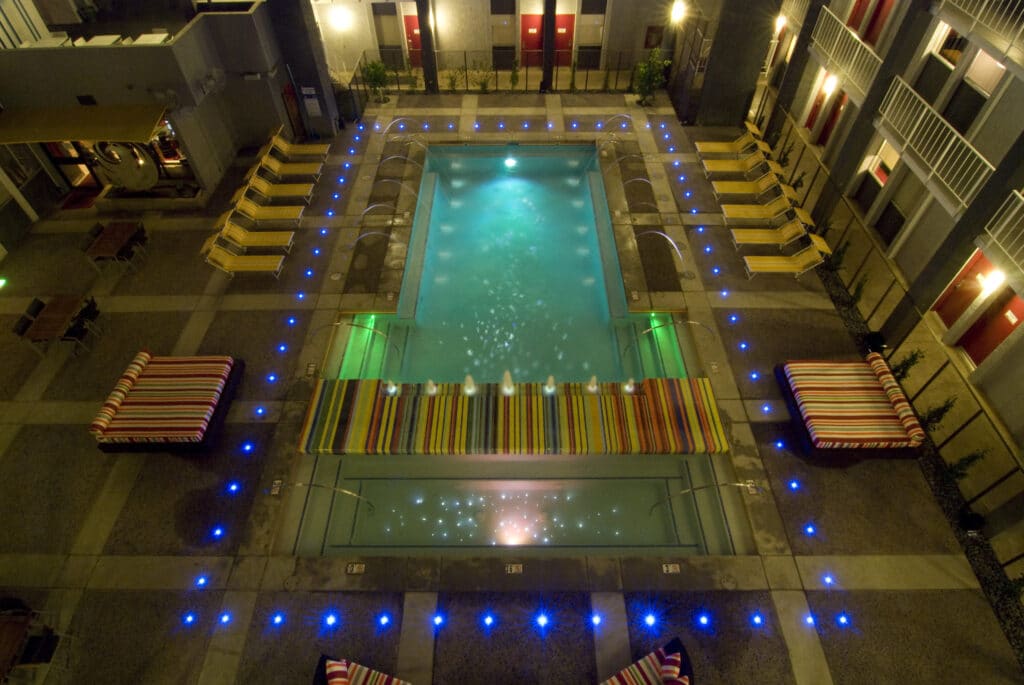
Are You Interested in Concrete Pools?
Start designing your dream pool — get a free design consultation with a local Premier builder.
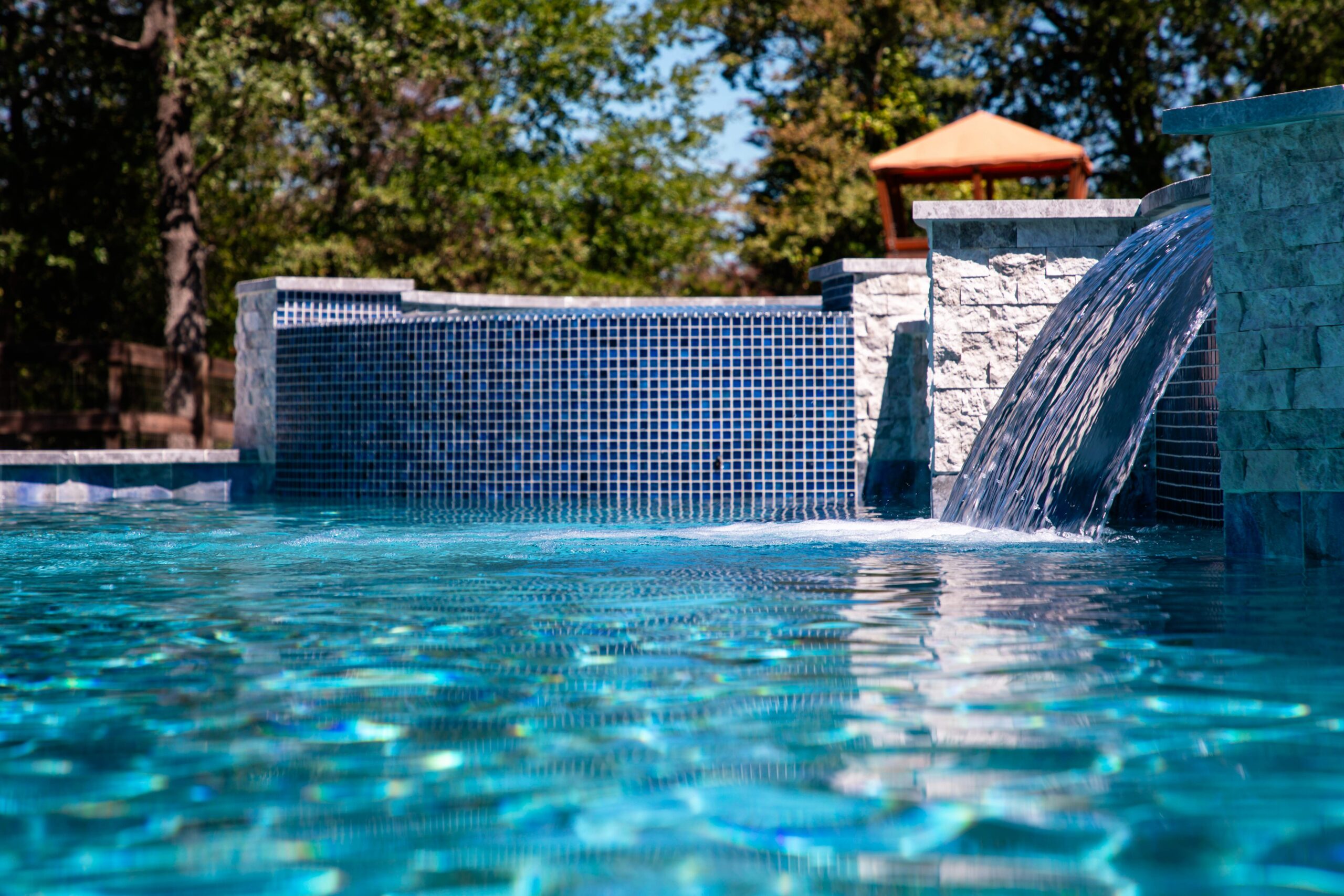
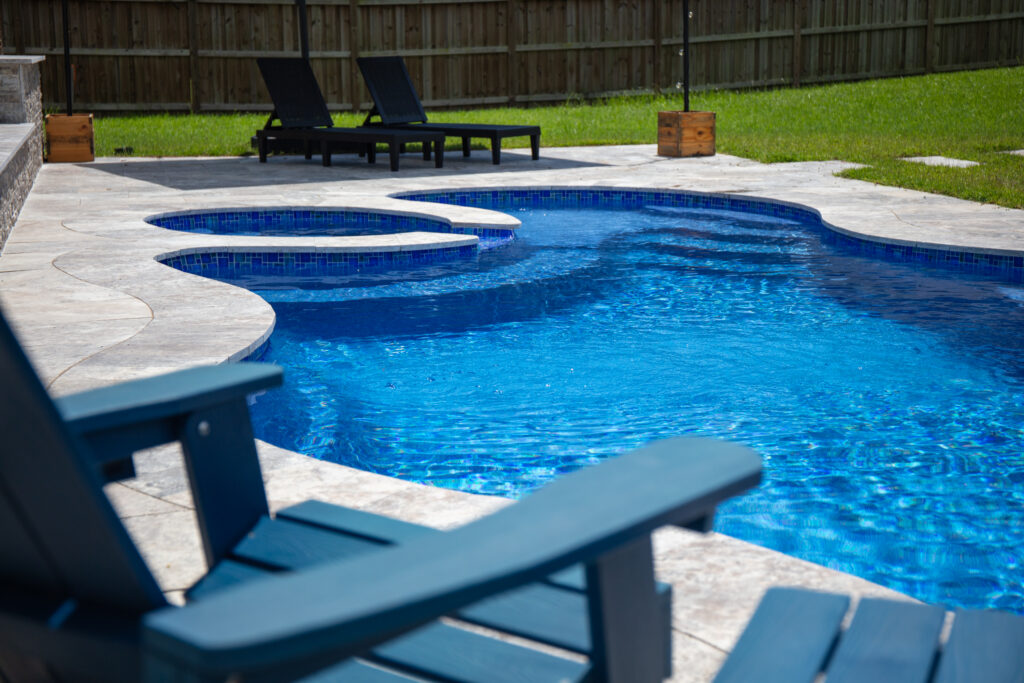
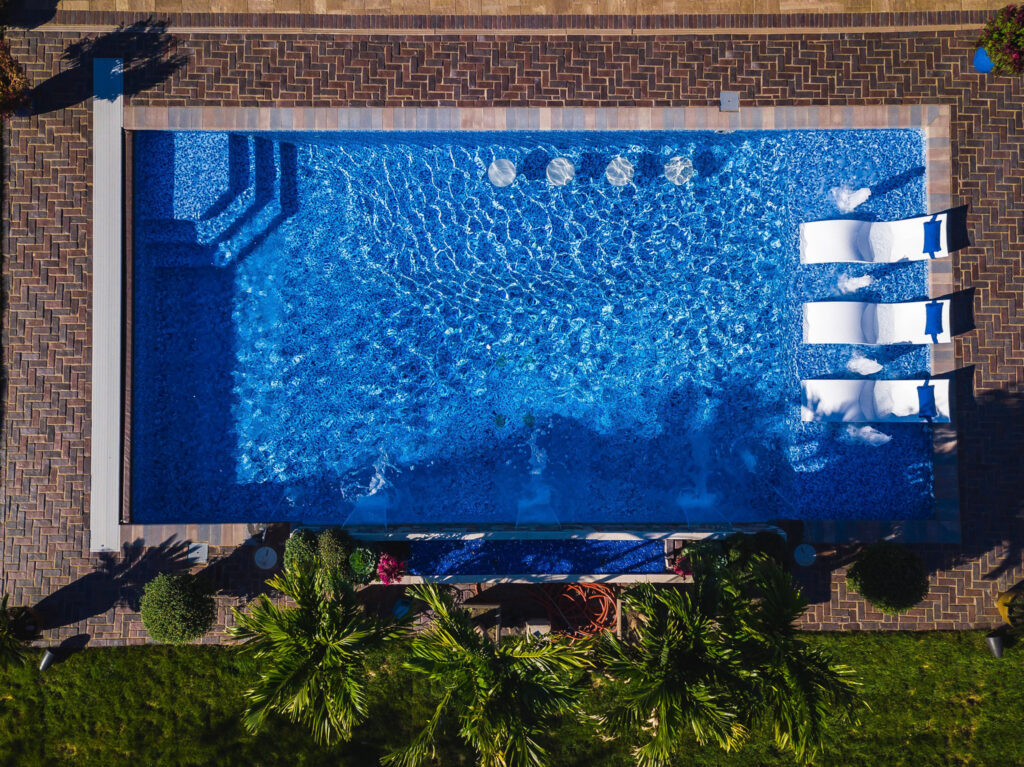
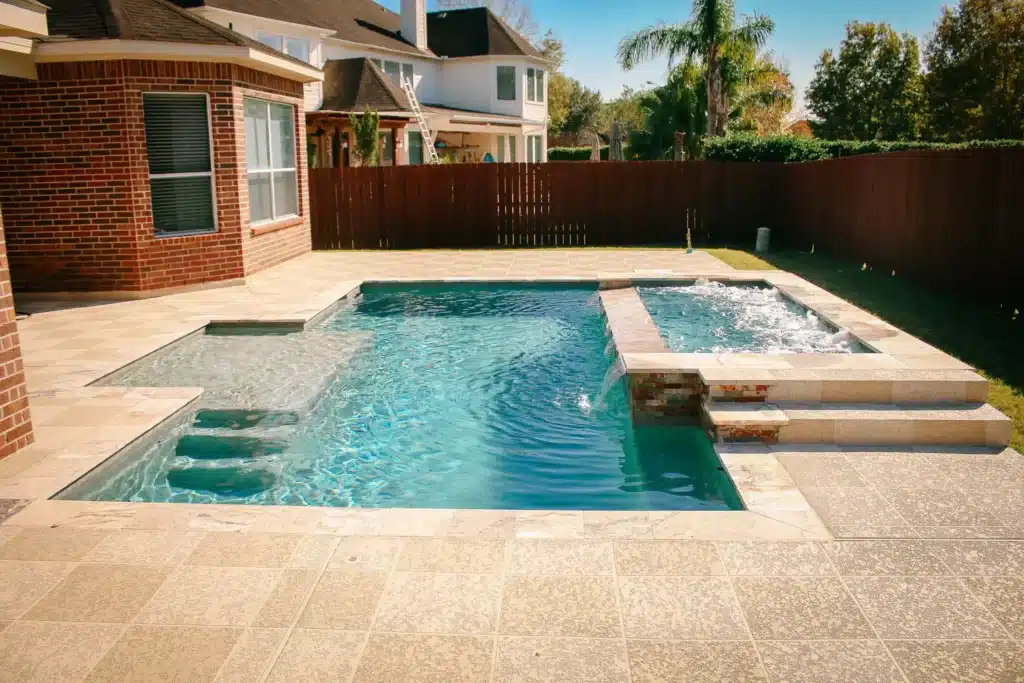
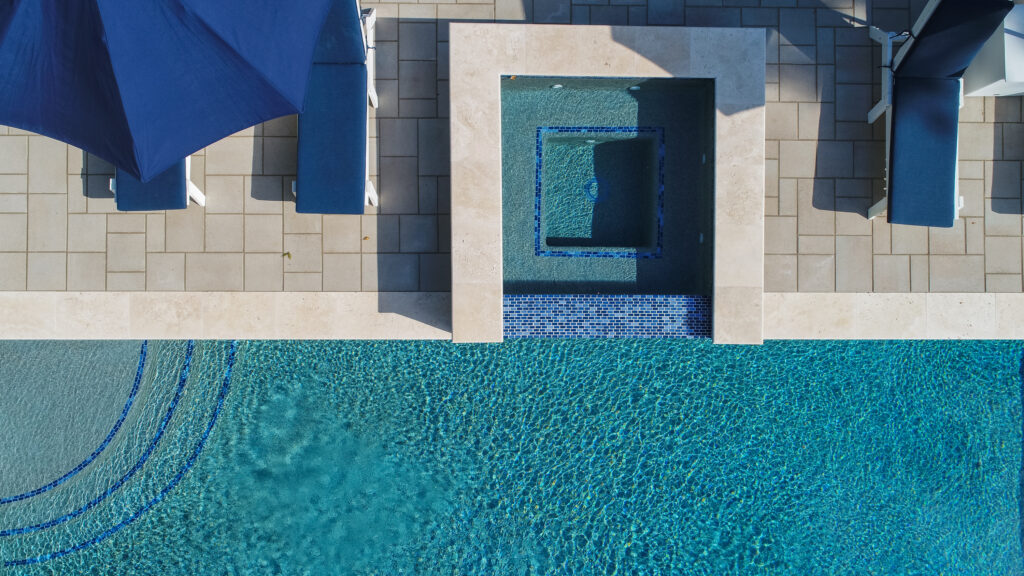
Explore concrete pools designs built by Premier Pools & Spas — real projects to inspire your own backyard transformation.
Pros & Cons
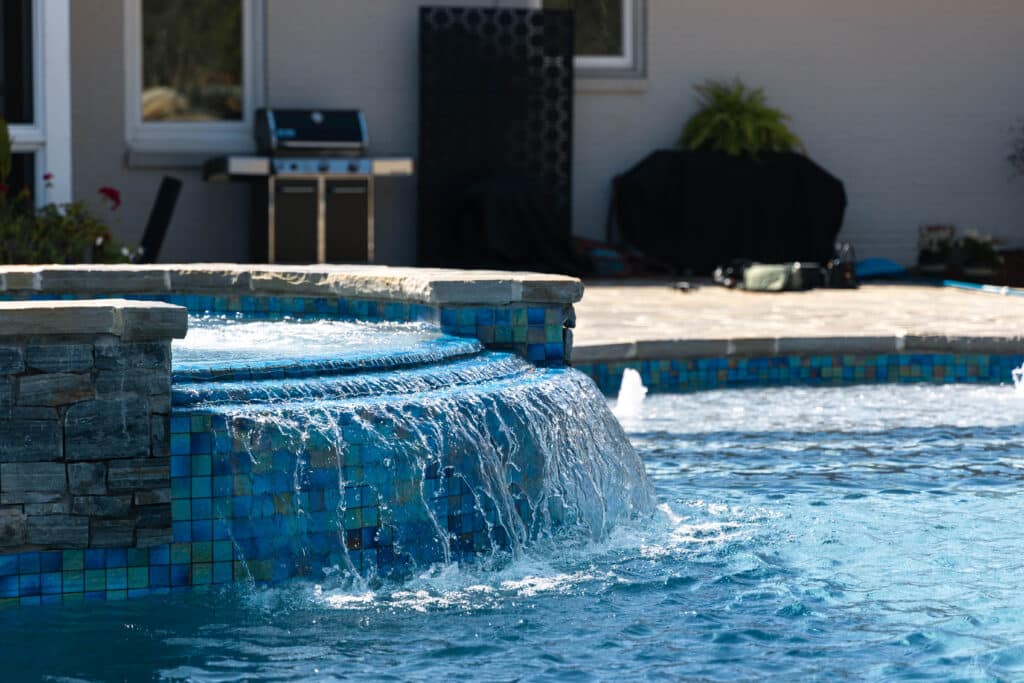
Concrete pools are highly durable and long-lasting. This material is perceived to be of the highest quality and can be remodeled multiple times in a pool’s lifetime.
Regardless of the size and shape of your backyard, you can choose beautiful pool designs and themes. Whether it is soft curves or a modern silhouette with sharp angles.
Concrete pools are distinguished by their unique finishes, which offer a wide range of aesthetic options not typically found in fiberglass pools. These finishes, such as pebble, tile, and quartz, each finish provides its own appeal that can complement any backyard setting.
Although we build concrete pools quickly, they require many more steps than fiberglass pools. This means installing a concrete pool can be a longer process than other options.
Process
Underground lines of utilities like water, power, and gas are marked out.
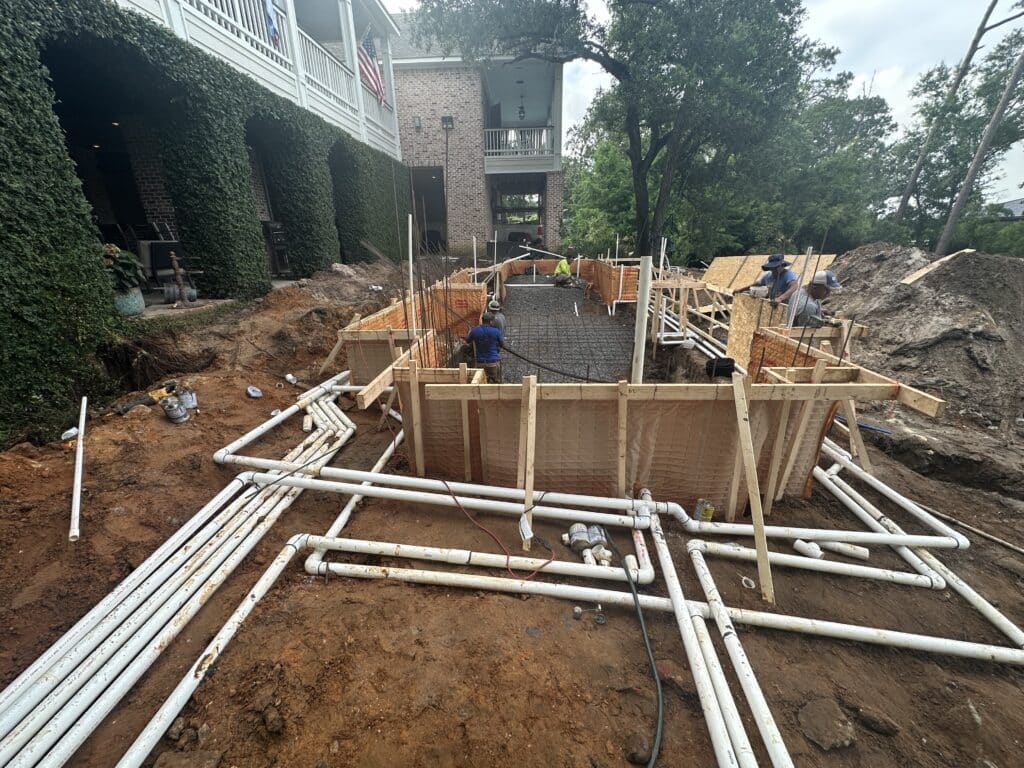
We discuss the pool install with the homeowner and finalize the pool layout.
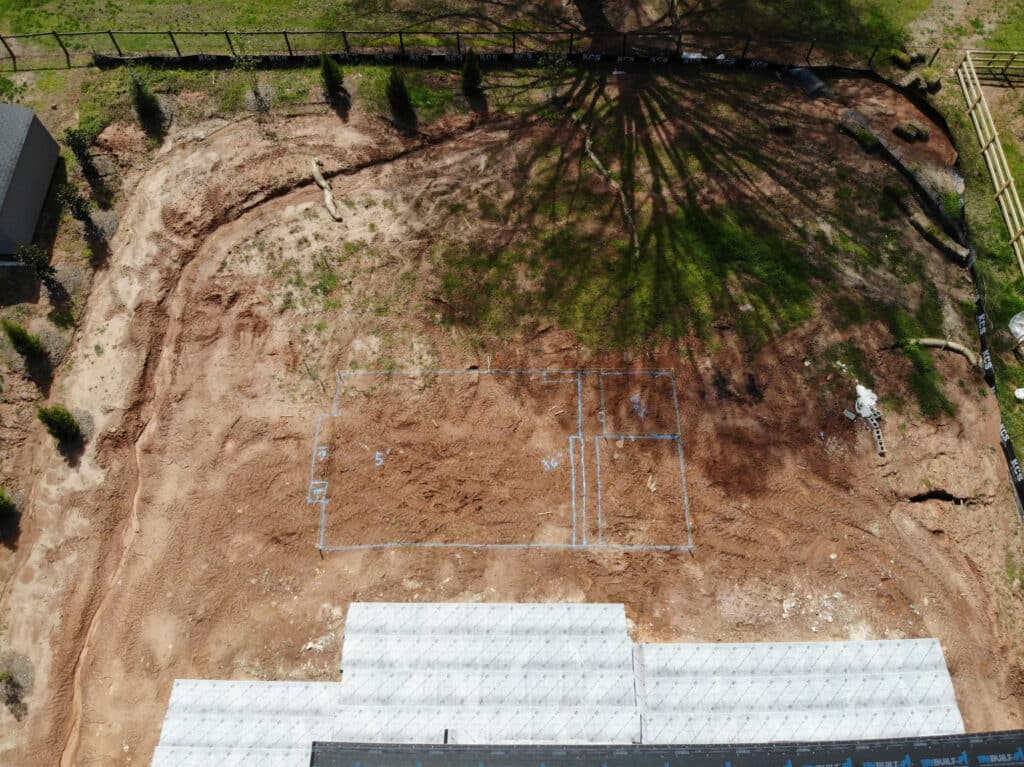
We dig the site and fit a stone bed to add strength and support to the concrete swimming pool.
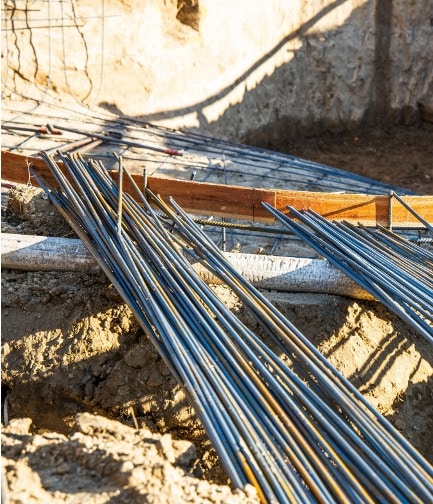
The structural reinforcement is placed over bricks & the entire dup-up site acts as a skeleton to the pool.
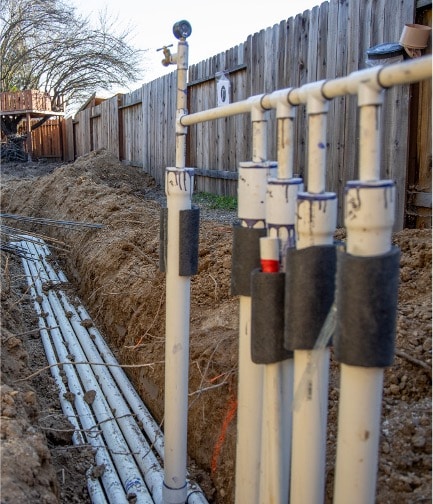
For a more energy-efficient pool, we use plumbing lines that are larger than average. Then, we add electrical wiring.
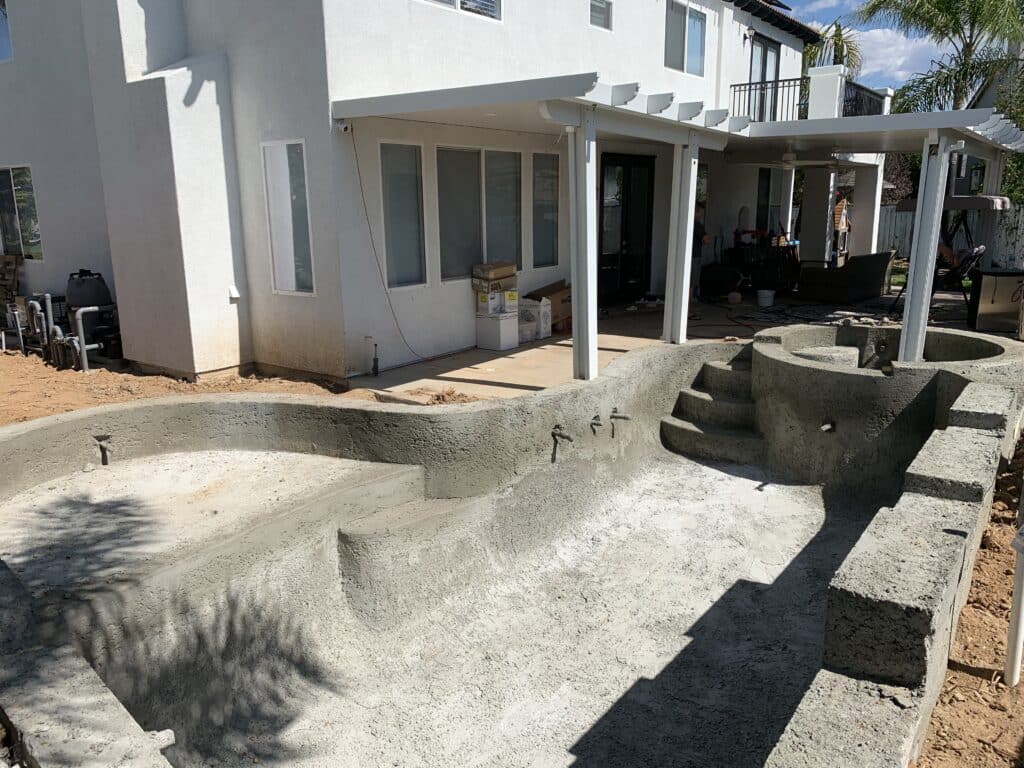
The pool shell is sprayed onto the steel reinforcement.
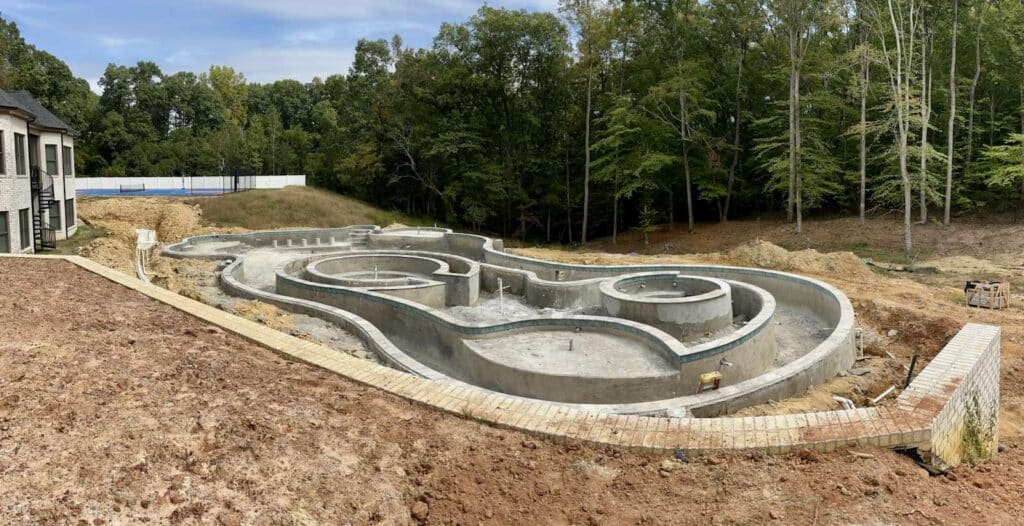
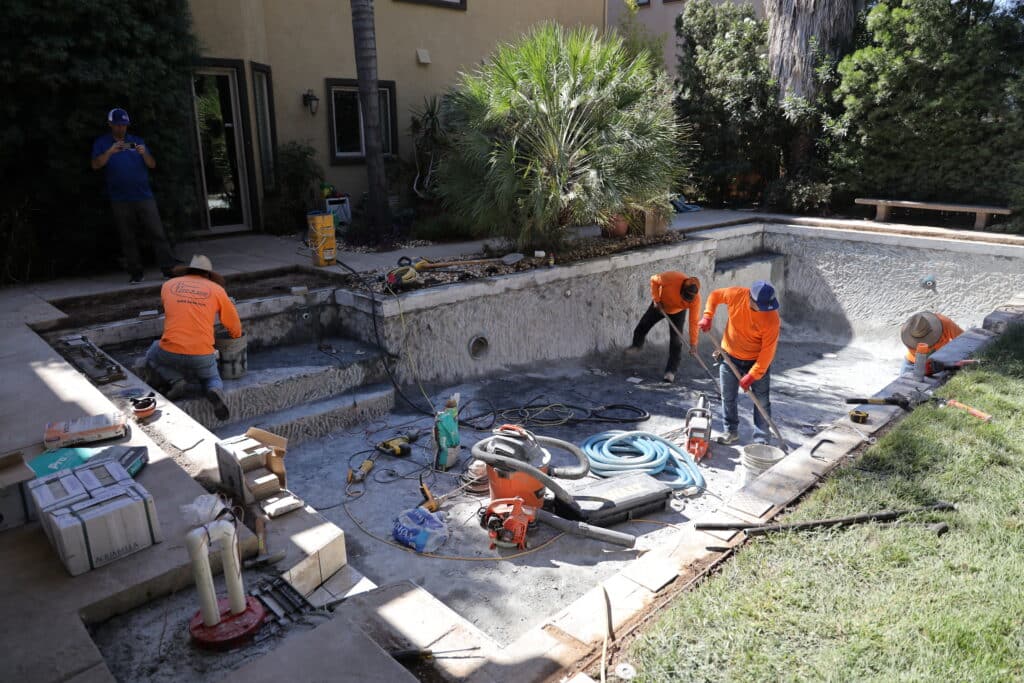
We add the perimeter tile, coping over the concrete bond beam, and decking around the pool.
Pool circulation, heating, and filtration equipment is added to the concrete pool.
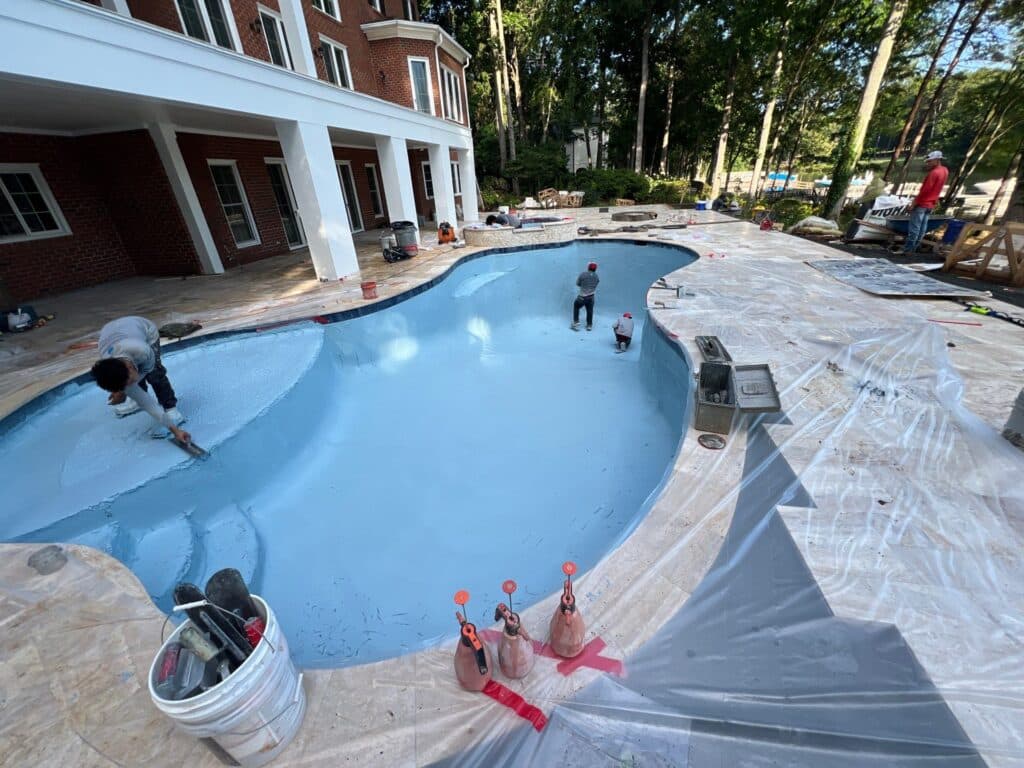
The last step is to apply a waterproof pool interior finish and finalizing the landscape design.
FAQs
Start designing your dream pool — get a free design consultation with a local Premier builder.
The base for concrete can be boiled down to three ingredients – sand, cement, and water. This mixture is melded with various amounts of liquid and sprayed into place through a hose system onto the pool frame’s rebar.
Keep in mind that the duration of any concrete pool construction project can vary according to factors including pool size, complexity, location, time of year, and more. Curious about how long your future pool would take? Reach out to one of our builders specializing in concrete pools to determine an estimated build time.
Concrete, a mixture of cement, sand, and water, is highly durable and versatile, allowing for various shapes and designs. Concrete pools are customizable, providing flexibility in size, depth, and features to suit your preferences. Additionally, they offer long-term durability, resisting cracks and structural issues better than other pool types.
The major distinction between shotcrete and gunite is that with the former, the concrete mixture is already blended with water before application; it just solidifies when it touches the ground. In contrast, gunite is a plaster-like mix that only combines with water once it’s sprayed from the application hose.
Yes, concrete pools are safe to use with saltwater.