
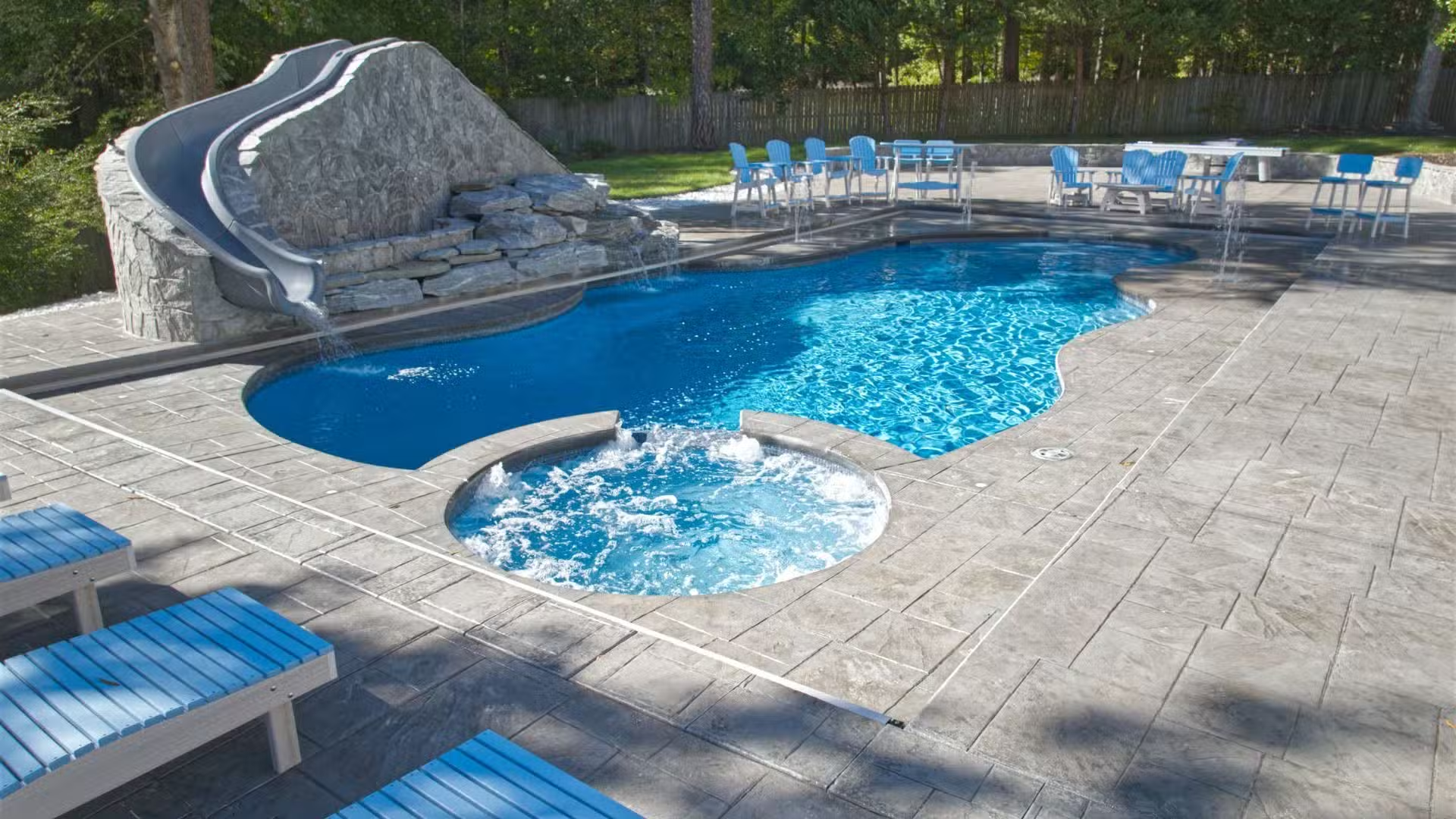
When Is the Best Time to Build a Pool in Richmond, VA?
The best time to start planning a Richmond, VA pool is late summer or fall of the year before, if you want to swim by late spring or early summer.
That gives you time for design, property review, HOA approval, permitting, and scheduling before construction begins. Our Richmond team builds year-round, so a fall start usually means breaking ground in winter and swimming by summer.
Quick Answer:
- Best time to contact us: late summer through fall for the following swimming season
- Best time for design and approvals: fall through early spring
- Best time to build: winter through early spring for a summer swim. Gunite takes about 3 to 4 months and fiberglass about 4 to 8 weeks from breaking ground.
📋 Table of Contents
- Why Richmond Pool Planning Starts in the Fall
- Start With Your Desired First-Swim Date
- Season-by-Season Comparison
- Your Pool Type Changes the Construction Timeline
- What Can Delay a Richmond Pool Project?
- How to Choose the Right Time for Your Pool Project
- How Premier Pools & Spas Plans a Richmond Pool Timeline
- FAQs
Why Richmond Pool Planning Starts in the Fall
In Richmond, the best time to plan a pool usually comes well before the best time to build one. If you want to swim by late spring or early summer, late summer and fall are often a strong time to start talking with us.
Starting early gives you time for:
- Property and backyard access evaluation
- Pool design and feature selections
- HOA approval submissions
- Permit applications, which depend on whether your property falls under the City of Richmond, Henrico County, Chesterfield County, or a neighboring county like Hanover, Powhatan, or New Kent
- Construction scheduling
Planning in fall doesn’t mean construction has to start right away. It means each stage has room to finish without rushing.
Ready to Plan Your Richmond Pool?
Start early with a design consultation and create a timeline that matches your first swim date.
Start With Your Desired First-Swim Date
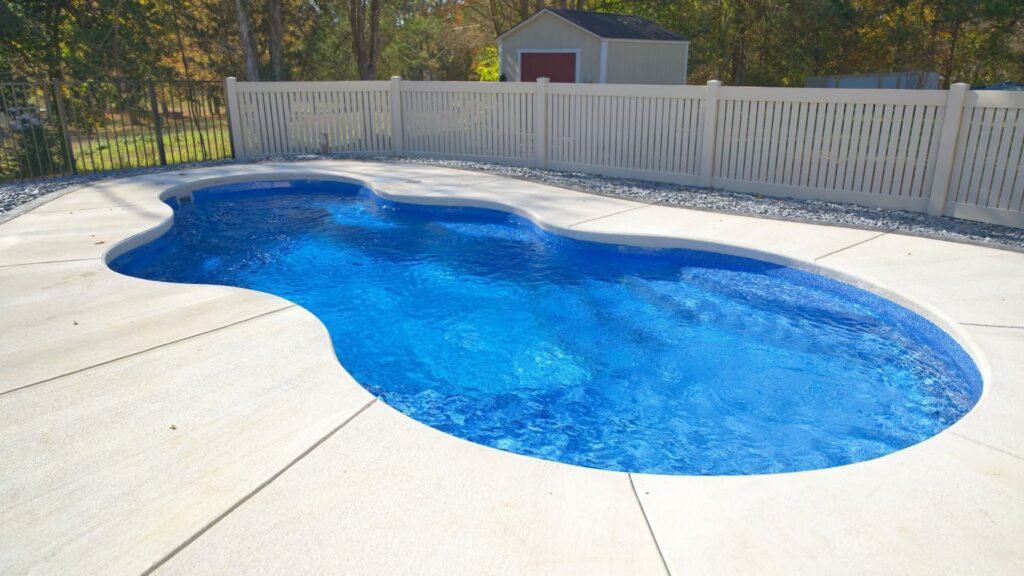
Your first-swim date tells you how much room you have. If the window is tight, a faster-to-build fiberglass pool may matter more than it would otherwise.
Most projects follow the same sequence: consultation, design, HOA and permit review, construction, then your first swim.
| Desired Result | Planning Approach | What It Means for You |
|---|---|---|
| Swimming by late spring or early summer (for example, around Memorial Day) | Contact us in late summer or fall of the year before | Gives design, HOA review, permitting, and scheduling time to finish before warm weather arrives |
| Swimming later in the summer (for example, July or August) | Fall, winter, or early spring planning may still work, depending on builder availability and permit review times | You have more flexibility, but a spring start leaves less room if approvals take longer than expected, and spring is the busiest season for permit offices |
| No fixed completion date | Start with a consultation and site review, then let the design and approval stage set your build window | You can choose the timing that fits your property, pool type, and design needs, rather than a deadline |
These are planning windows, not guarantees. Weather, permits, site conditions, material availability, and project details can all affect the final timeline.
Season-by-Season Comparison
In Richmond, fall is usually the best time to start your pool project. Winter and early spring are the typical windows for finishing design and approvals and breaking ground.
| Season | Best Use | Principal Consideration |
|---|---|---|
| Fall | Consultation, design, site review, and scheduling | Strong runway for the following summer |
| Winter | Design, approvals, and construction | Hard freezes and heavy rain can pause digging and concrete work |
| Spring | Construction when planning is already complete | Busiest season for permit offices and builders |
| Summer | Planning for next year or flexible-date projects | A summer start may mean a later completion date |
🍂 Fall: A Strong Time to Begin Planning
Fall is often a good time to start planning. You have more time to make design decisions and can begin HOA and permit work early.
That gives you a better runway for a late-spring or early-summer swim. Construction may also be possible in fall, depending on your property, pool type, and builder schedule.
❄️ Winter: Useful for Approvals, and a Normal Time for Construction
Design, selections, HOA submissions, and permit applications can all continue through winter, so your project is ready to move once spring arrives.
Richmond winters are workable most days. Normal daytime highs run about 48 to 52 degrees from December through February, while overnight lows average 29 to 32 degrees. Hard freezes, frozen ground, and heavy rain can pause excavation, concrete work, and finishing, so expect some stop-and-start weeks.
A winter start doesn’t automatically mean a lower price. Pricing depends on project scope and materials, not the season.
🌷 Spring: Possible, but With Less Schedule Flexibility
A spring inquiry can still work, especially if design, HOA review, and permits are already complete. Builder schedules tighten in spring, and permit offices are at their busiest, so approvals take longer.
A complex gunite project may not be ready for early summer. Ask us for a schedule based on your property rather than a general timeline.
☀️ Summer: Plan Ahead Instead of Assuming It Is Too Late
Summer is a good time to evaluate your yard while you are actively using it. You can also begin making design decisions and set a realistic target for next summer.
A summer start doesn’t always mean waiting a year. Depending on pool type, approvals, and builder availability, some projects may still fit a later-season swim.
Choose the Right Time to Build Your Pool
We’ll help you plan around your preferred swim date, pool type, approvals, and construction schedule.
Your Pool Type Changes the Construction Timeline
We build gunite pools in about 3 to 4 months, and fiberglass pools take about 4 to 8 weeks from breaking ground. Your pool type is one of the biggest factors in your schedule, along with design, permitting, and site conditions.
Gunite Pools
Gunite (concrete) pools offer a high degree of design flexibility, including custom shapes, water features, and fire features. We typically complete them in about 3 to 4 months.
Permitting, weather, and project complexity can extend that timeline, especially when the project includes:
- Custom pool shapes
- Water or fire features
- Large patios or outdoor-living areas
We’ll walk you through how your chosen features affect your schedule.
Fiberglass Pools
Fiberglass pools take about 4 to 8 weeks from breaking ground. Retaining walls and larger decks push toward the longer end.
The install is only one part of the calendar. Site preparation, permits, selections, scheduling, and final work all affect the complete project.
Vinyl-Liner Pools
We build vinyl-liner pools on request, though most Richmond homeowners choose gunite or fiberglass. Ask us about timing if vinyl is on your list.
Outdoor-Living Additions
Patios, outdoor kitchens, fire features, landscaping, and hardscaping can add steps to your schedule, so it helps to plan them early alongside the pool.
Not sure which pool type fits your timeline? Request a free design consultation to talk through your yard, design goals, and target swim date.
Which Pool Type Fits Your Timeline?
Compare gunite, fiberglass, and vinyl options with a team that understands Richmond pool construction.
What Can Delay a Richmond Pool Project?
The most common delays come from site conditions, permits, HOA review, weather, and design changes. Each one can affect when construction begins and when your pool is ready to use.
🏡 Property and Access Conditions
Your backyard plays a major role in the construction timeline. Before building begins, we evaluate your property and identify any challenges.
Common factors include:
- Limited equipment access
- Sloped areas or retaining requirements
- Drainage concerns
- Utility locations
- Clay-heavy soil
- Survey or easement questions
- Mature trees, common on older Richmond lots
Addressing these items early reduces the chance of surprises once construction starts. Before any digging, Virginia 811 must be contacted at least three working days ahead so utilities can mark their lines. Your builder handles that call.
📄 Permits and Jurisdiction
Permit requirements depend on where the property is located. A Richmond mailing address does not always mean the project is reviewed by the City of Richmond.
The City of Richmond may route plans to Building, Zoning, Planning and Preservation, Public Utilities, Water Resources, and Public Works, which review them at the same time. Requirements can vary between nearby jurisdictions.
Properties near streams or rivers may fall inside a Chesapeake Bay Preservation Area. In Henrico, a 100-foot Resource Protection Area buffer runs along perennial streams, and work there needs a water quality impact assessment.
In the City of Richmond, projects in Chesapeake Bay areas must include a Chesapeake Bay plan with the permit application.
Homeowners should confirm which office reviews their property before planning a construction timeline:
🏘️ HOA Approval
HOA approval is separate from government permits and can affect your project start date. Chesterfield County asks homeowners to confirm with their HOA that a pool is allowed before applying for a permit. Before finalizing your pool schedule, review:
- Community design guidelines
- Submission requirements
- Property survey documents
- Approval timelines
Gather these items first, since a late HOA question can push back your start date.
🌧️ Weather
Richmond gets about 45.5 inches of precipitation a year, spread across every season, so there’s no true dry season to plan around.
Rain, cold temperatures, and site conditions can affect excavation, concrete work, and finishing. Build a few weather days into any schedule, whatever the season.
✏️ Design Changes and Material Selections
Late changes can affect both the schedule and the approval process. Adjustments to pool size, finishes, water features, decking, or outdoor-living additions may require new decisions before work can continue.
Finalizing your design early gives you a more reliable schedule from start to completion.
How to Choose the Right Time for Your Pool Project
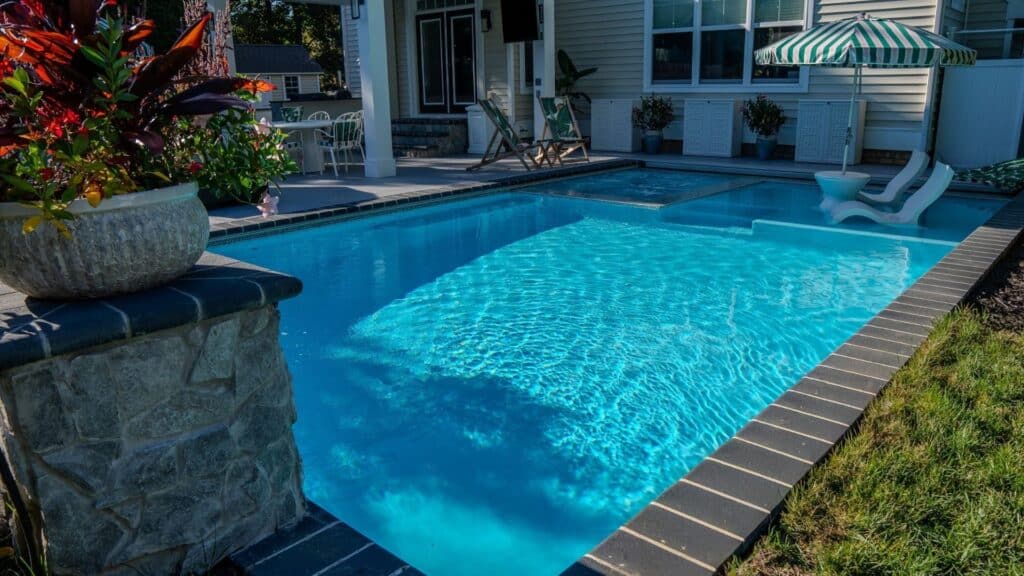
Three questions help you pick your start time: when you want to swim, which pool type you want, and how prepared your property is.
1. When Do You Want to Swim?
For a Memorial Day swim, start in late summer or fall. For a July or August swim, a winter start can still work.
2. Which Pool Type Are You Considering?
Each pool type has its own customization options and construction process:
- Gunite pools: custom shapes, water features, and fire features, with more on-site construction.
- Fiberglass pools: water and fire feature options, with a faster installation once preparation and approvals are complete.
Knowing your preferred pool type helps us build a more accurate schedule.
3. How Prepared Is the Property?
Before starting the project, consider whether you have:
- A recent survey or plat
- HOA information and requirements
- Clear equipment access to the backyard
- A known budget
- Decisions about major features and upgrades
The earlier these details are settled, the easier it is to plan your timeline.
If any are still undecided, contact Premier Pools & Spas of Richmond early.
How Premier Pools & Spas Plans a Richmond Pool Timeline
A realistic pool timeline starts with understanding your goals, not just choosing a construction date. At Premier Pools & Spas of Richmond, we work through the planning process step by step, so you know what needs to happen before construction begins.
Our Process
- Discuss your desired first-swim date: The timeline starts with when you want to use your pool. That date helps determine when design, approvals, and scheduling should begin.
- Review the property, access, and project goals: We evaluate your backyard layout, access, site conditions, and how you plan to use the space.
- Compare suitable pool types: We build gunite and fiberglass pools (vinyl on request), along with outdoor-living features, and help you compare which fits your goals and schedule.
- Develop the design and selections: We review pool size, shape, finishes, features, decking, and upgrades before construction begins. You’ll see a 3D design, usually within 48 to 96 hours of the site visit.
- Identify HOA and permitting requirements: Approval requirements vary by property location. We handle the permitting, and addressing requirements early reduces the chance of delays later.
- Establish a realistic construction window: Your schedule is based on pool type, site conditions, approvals, and project scope, not a one-size-fits-all timeline.
- Communicate schedule changes caused by approvals, weather, or site conditions: We keep you updated on what changed and what comes next.
- Hand off your pool with Pool School: A team member walks you through running your pool in a 60 to 90 minute session at your home.
Our Richmond team builds pools in Richmond, Midlothian, Bon Air, Short Pump, Tuckahoe, Henrico, Glen Allen, Chesterfield, Mechanicsville, Ashland, Powhatan, Goochland, and New Kent.
Starting the conversation early gives us more time to understand your property and build a timeline that fits your goals. Request a free design consultation or call (804) 567-9197.
Frequently Asked Questions
Does every pool need a permit in the City of Richmond?
Nearly every inground pool does. The City exempts only pools with 150 square feet of surface area or less that also stay under its gallon and depth limits. A fence that serves as the pool barrier needs a permit too, even though most fences don’t.
Do I need a fence around my pool in Chesterfield County?
Yes. Chesterfield County requires a barrier at least 48 inches tall, with self-closing, self-latching gates that open away from the pool. A powered safety cover that meets ASTM F1346 can stand in for a fence-style barrier. Confirm your own locality’s rules during design.
What inspections does a pool need in Chesterfield County?
Chesterfield lists footing, pool underground, bonding, electrical rough-in and final, barrier, and final building inspections, plus gas rough-in and final if you add a gas heater. The pool can’t be used until every required inspection, including the barrier, has passed.
Who calls Virginia 811 before the dig?
Your builder does. Virginia 811 must be contacted at least three working days before any digging so utilities can mark their lines. Weekends and state or national holidays don’t count, so a call made late in the week can push a start date into the next one.
How long do pool permits take around Richmond?
Plan on about 3 to 6 weeks in most Richmond-area localities. Spring is the busiest season for permit offices, so applications filed in fall or winter usually face less waiting. A lot in a Chesapeake Bay protection area adds plan review steps.
How does Richmond’s clay soil affect a pool build?
Richmond’s clay-heavy soil expands and contracts with moisture, which affects excavation, drainage, and how the shell is engineered. It can need extra stabilization, and a long wet stretch can pause digging. We check soil during the site review so the schedule accounts for it.
🔗 Planning your budget too?
See our Richmond inground pool cost guide for typical price ranges by material, size, and style.
Ready to Build Your Richmond Pool?
The best time to build a pool in Richmond comes down to your swim date. For most families, that means planning in fall, breaking ground in winter, and swimming by summer.
Tell us when you want to swim, and we’ll help you plan backward from that date.